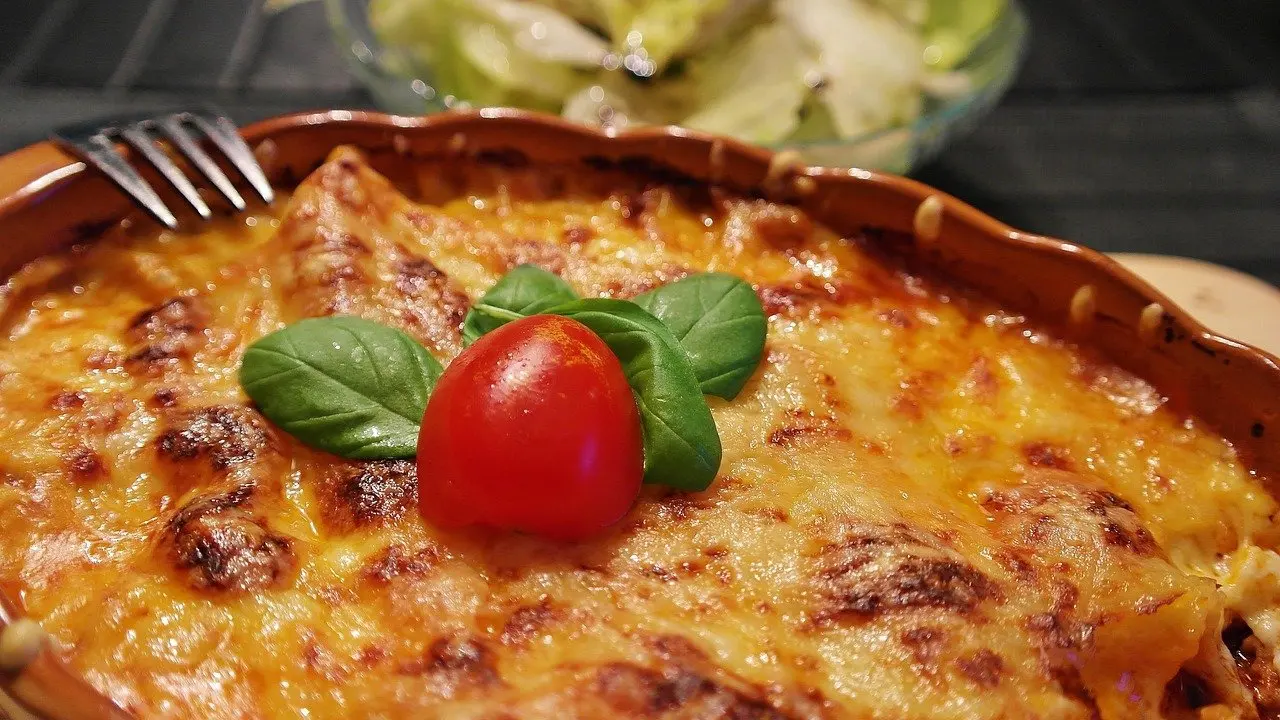
Italian home cooking recipes begin with a choice of effort: quick tomato pasta sauces are listed at 20 mins, while filled pasta, baked pasta and preserves call for a longer, planned session.
The first decision is how much time the meal can take. Start with a fast sauce such as homemade italian tomato sauce, then move towards dough, fillings and jars as confidence grows.
Choosing where to start
Italian home cooking is built on a small number of dependable ideas: a good sauce, pasta or rice cooked with attention, a simple main course and a side dish that suits it. Italian cuisine is described by Jamie Oliver’s recipe collection as famous for its pasta, creamy risottos and wood-fired pizzas. For a home cook, that means the most useful first recipes are the ones that teach a transferable skill, not the most elaborate dishes.
Four criteria narrow the choice quickly. Work through them in order, because the first one rules out the most options.
- Time on the day. A weeknight meal needs a recipe with a short listed time. A weekend afternoon allows dough, filling and shaping. Check the listed total time before shopping, not after.
- Equipment. A saucepan, a large pot for pasta, a frying pan and a baking dish cover most of the beginner repertoire. A rolling pin or pasta machine only matters once dough enters the plan.
- Pantry. Dishes that rely on tinned or jarred ingredients, olive oil and dried pasta can be cooked on short notice. Dishes built on fresh vegetables, fresh cheese or fish need a shopping trip first.
- Comfort with technique. Sauces forgive small mistakes. Risotto rewards attention. Filled pasta rewards patience and a clean, floured work surface.
If time is short
Choose a tomato-based pasta. The simple arrabbiata and simple puttanesca on Jamie Oliver’s Italian collection are each listed at 20 mins, which makes them the most practical first recipes for a weekday evening. Both lean on pantry ingredients, so they also teach what a well-stocked Italian kitchen looks like.
If there is a free afternoon
Choose dough or a layered bake. The same collection lists pork agnolotti at 50 mins and classic cannelloni at 2 hrs. Those figures show the step up in commitment when pasta is filled or baked, and they are a fair guide to how much of a session to set aside.
If the goal is a full meal
Pair a first course with a main and a side. A pasta or risotto course, a simple fish or meat main and a vegetable side give a balanced table without requiring every dish to be complicated. The later sections of this guide follow that order.
The Italian pantry that makes recipes work
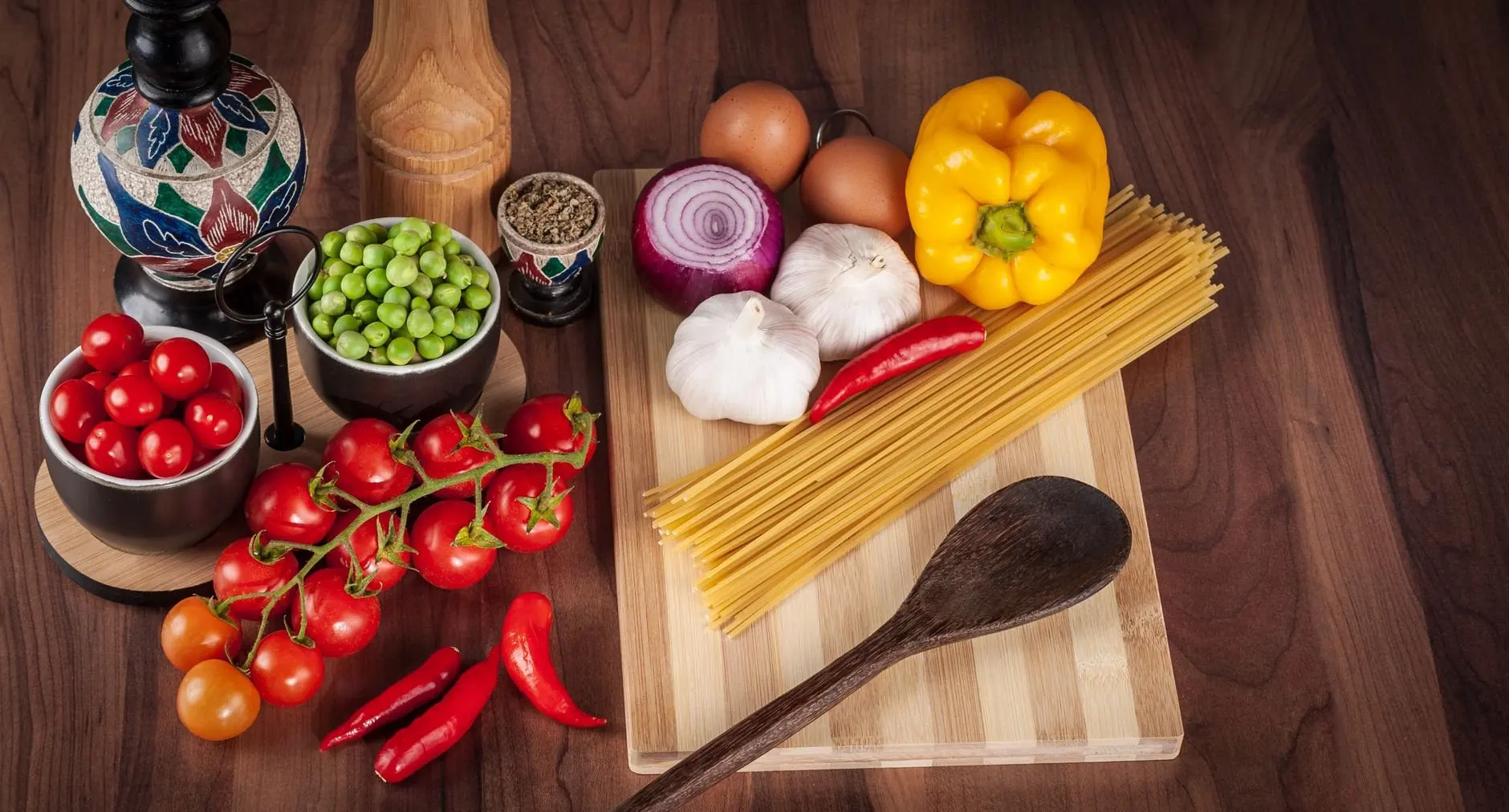
A short list of staples removes most of the friction from Italian cooking. Jamie Oliver’s collection notes that the Italian store cupboard is a treasure trove of ingredients, and the recipes in this guide draw on the same few categories again and again: pasta, tomatoes, olive oil, cheese, rice and preserved vegetables.
- Dried pasta. Keep a long shape and a short shape on the shelf. Long strands suit smooth, oily or tomato sauces. Short shapes suit chunkier sauces and baked dishes.
- Tomatoes. Tinned or jarred tomatoes make year-round sauces possible. Fresh cherry tomatoes suit quick pans with chilli and garlic.
- Olive oil. Olive oil is the cooking fat and the finishing touch in much of this repertoire. A sensible approach is to keep an everyday bottle for cooking and a more characterful one for drizzling over finished dishes.
- Rice for risotto. A risotto needs a short-grain rice and a warm, well-flavoured stock.
- Fresh cheese. Ricotta is a soft, mild cheese used in fillings and bakes, and it is best bought close to the day it is cooked.
- Aromatics. Onion, carrot, celery, garlic and chilli form the base of many sauces and stocks.
With these in place, any of the quick recipes below becomes a matter of fresh herbs and one or two perishables. The next step is to put them to work in the most flexible recipe type of all, the tomato sauce.
Tomato sauces and quick pasta
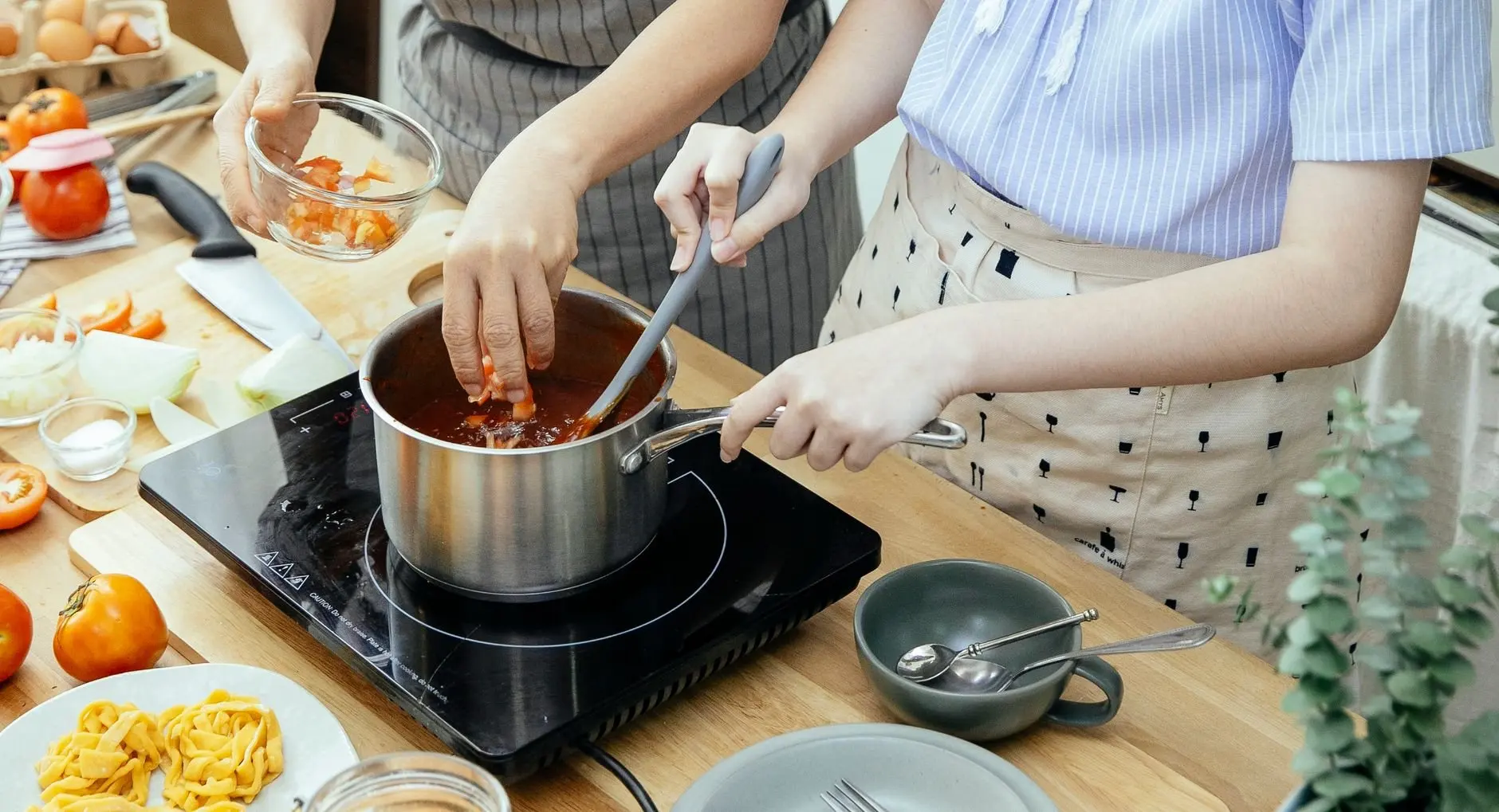
Tomato sauce is the best first Italian recipe because it teaches seasoning, patience and the balance between acidity and sweetness. It also scales: the same method becomes arrabbiata with chilli, puttanesca with savoury additions, or a plain sauce to freeze and use later.
Jamie Oliver’s collection lists both the simple arrabbiata and the simple puttanesca at 20 mins. That timing includes preparation, so the sauce and the pasta need to be planned together: start the pasta water first, then build the sauce while it comes to the boil.
Choosing a sauce style
- Arrabbiata. Choose it when the household likes heat. Chilli is the defining feature, so adjust the amount to taste before serving.
- Puttanesca. Choose it when the pantry holds briny, savoury ingredients. It suits cooks who like a sauce with a stronger, more assertive character.
- A plain tomato sauce. Choose it for children, for batch cooking or as a base for baked dishes. The method is covered in detail in homemade italian tomato sauce style recipes, and wider variations sit within classic italian pasta sauces.
Habits that improve any tomato sauce
Taste before the pasta goes in, because pasta water and cheese will both add salt. Finish with a little olive oil off the heat and torn fresh basil where the recipe calls for it. Combine the sauce and pasta in the pan for a short time so the sauce clings to the strands instead of pooling on the plate. These are matters of judgement and taste, not fixed rules, so adjust them to the sauce in front of you.
Dried and fresh pasta
Dried pasta is the everyday choice and fresh pasta is the special-occasion choice. They behave differently in the pot, and the right sauce changes with them.
Cooking dried pasta
Pasta cooking times differ by shape, thickness and brand, so the packet is the dependable guide. Taste a piece shortly before the suggested time ends, and drain when it is tender but still has a little resistance in the centre. Reserve a cupful of the cooking water before draining, because a splash loosens a thick sauce without diluting its flavour.
Cooking fresh pasta
Fresh pasta is delicate and cooks quickly relative to the time spent making it, so stay by the pot and test early. It suits lighter sauces, butter, simple oil-based dressings and fresh tomatoes, where the texture of the pasta itself is part of the dish. Heavy, long-simmered sauces are usually better matched to dried pasta. The full dough method, from mixing to rolling, is the subject of how to make fresh pasta at home.
Choosing between them
- Weeknight meal: use dried pasta and a quick sauce.
- Guests or a weekend: make fresh pasta and keep the sauce simple so the pasta is the star.
- Baked dishes: dried shapes hold their form better under a sauce and an oven, which is why stuffed shells and similar bakes are written with dried pasta.
Fresh filled pasta like tortelli
Tortelli, agnolotti and ravioli follow the same logic: a thin sheet of dough, a flavourful filling, a tight seal and a gentle simmer. The process is more about organisation than difficulty, so set out the dough, filling, flour and a tray before starting.
How to make filled pasta
- Make the pasta dough and let it rest, covered, so it relaxes and rolls out without springing back.
- Prepare the filling first and keep it thick. A ricotta-based filling with cooked, well-squeezed greens suits a first attempt because a wet filling is the main cause of tearing and leaking.
- Roll the dough into a thin sheet and keep the unused dough covered so it does not dry out.
- Place small mounds of filling along the sheet at even intervals, leaving enough room between them to seal.
- Fold or cover with a second sheet, press out the air around each mound and seal firmly, then cut the shapes apart.
- Set the finished pieces on a floured tray without letting them touch, then cook them in gently simmering salted water until they float and the edges feel tender.
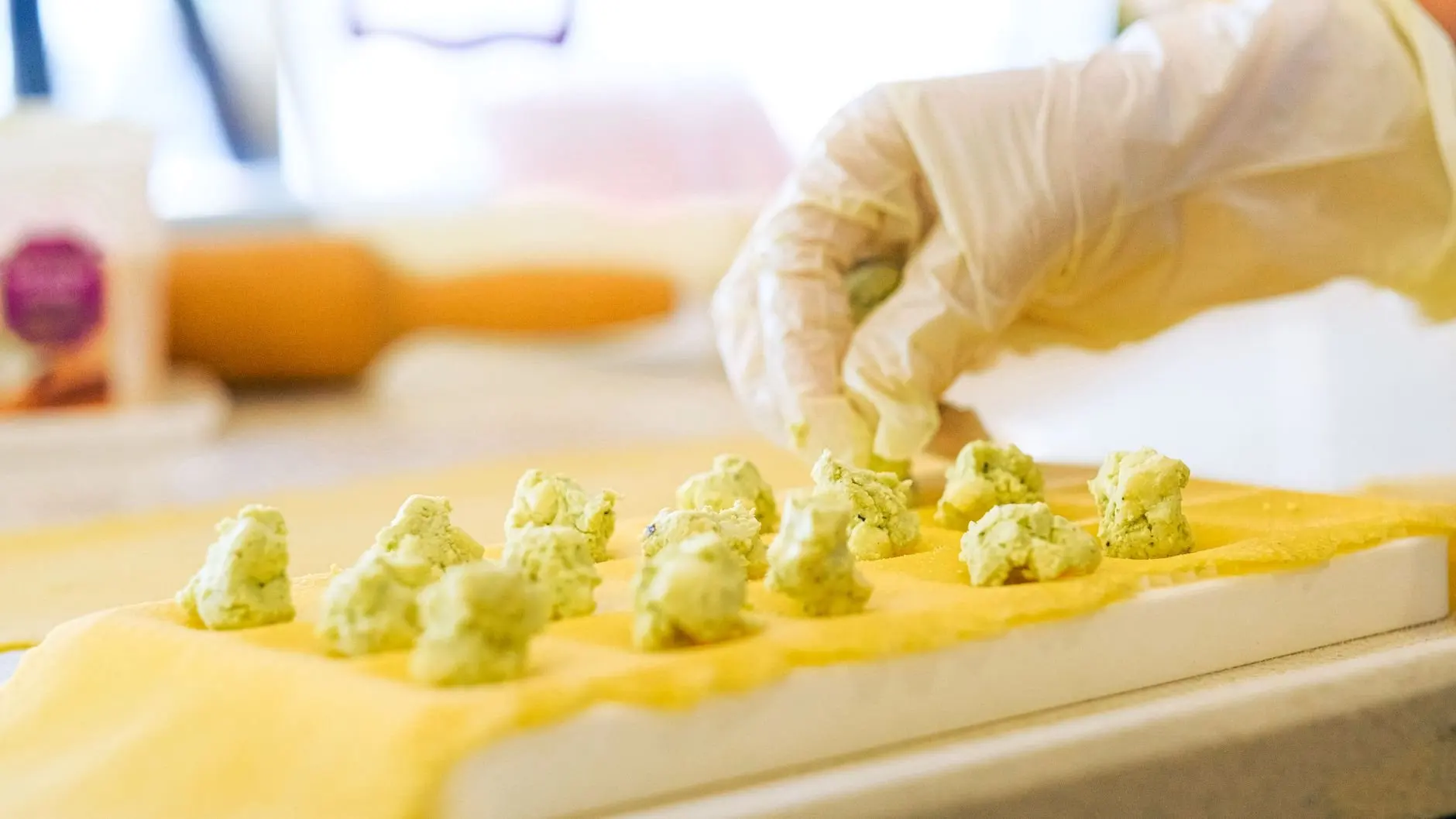
Time expectations matter. Jamie Oliver’s collection lists pork agnolotti at 50 mins in total, which is a useful benchmark for a filled-pasta recipe from start to finish. A first attempt at a new shape will probably take longer, so start earlier than seems necessary.
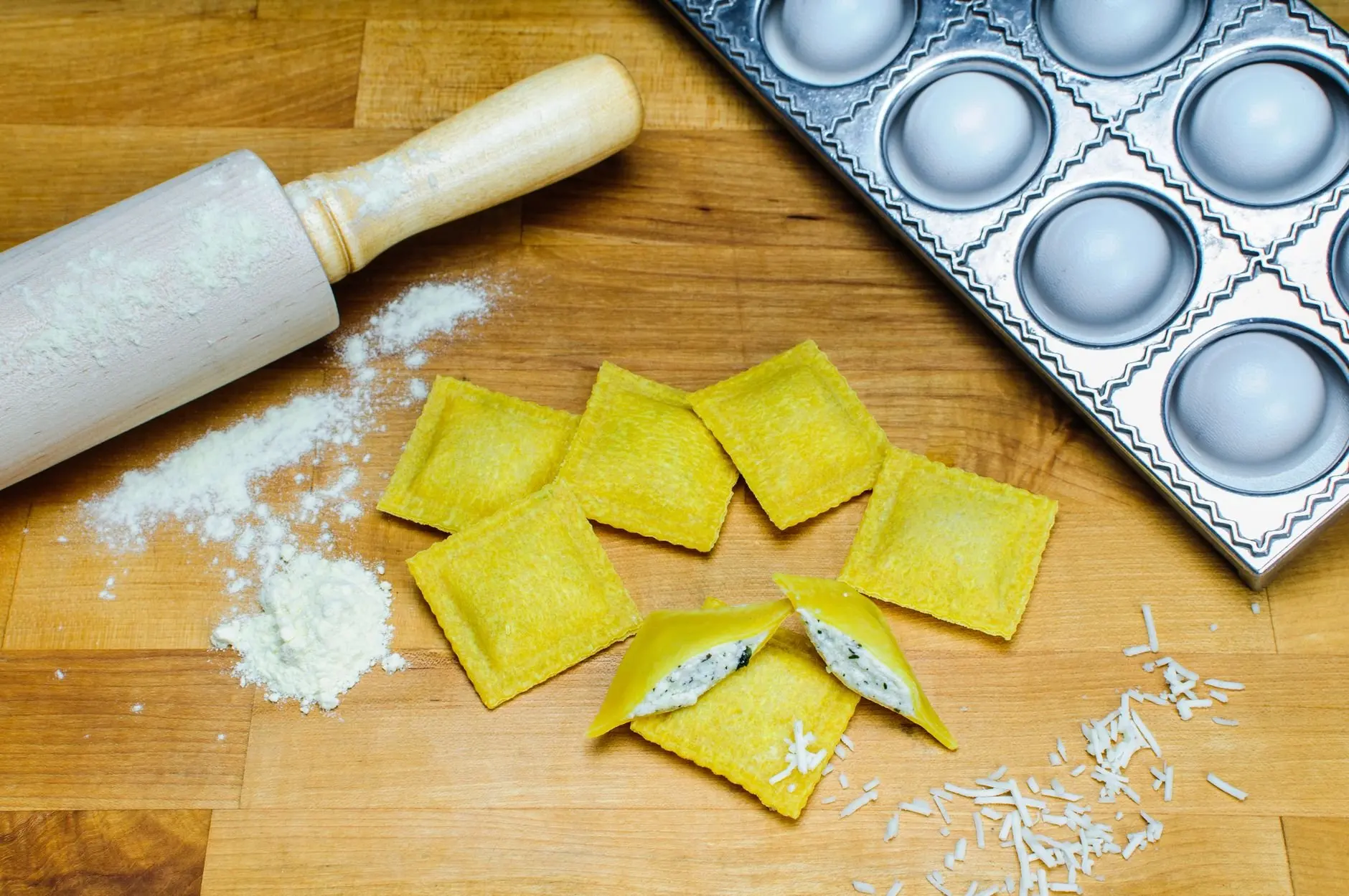
Serving filled pasta
Keep the sauce modest. Melted butter, a little olive oil or a light tomato sauce lets the filling show. A heavy sauce hides hours of work.
A baked alternative for ricotta
When rolling dough feels like too much, ricotta also works in a baked dish. Feasting at Home lists stuffed shells with mushrooms, spinach and ricotta among its Italian recipes, which uses dried pasta shells in place of homemade dough. It is a sensible bridge for cooks who want the filled-pasta flavour without the shaping.
Risotto, gnocchi and other first courses
Beyond pasta, Italian first courses rely on rice, potatoes and broth. Each one rewards a particular kind of attention, so choose according to how much time at the stove the evening allows.
Risotto
Risotto is a stirring dish. The rice is toasted briefly in fat, then finished by adding warm stock gradually until it turns creamy. It suits cooks who can stay near the pan and who like a dish served straight away. The method, the choice of rice and the finishing steps are covered in how to make risotto.
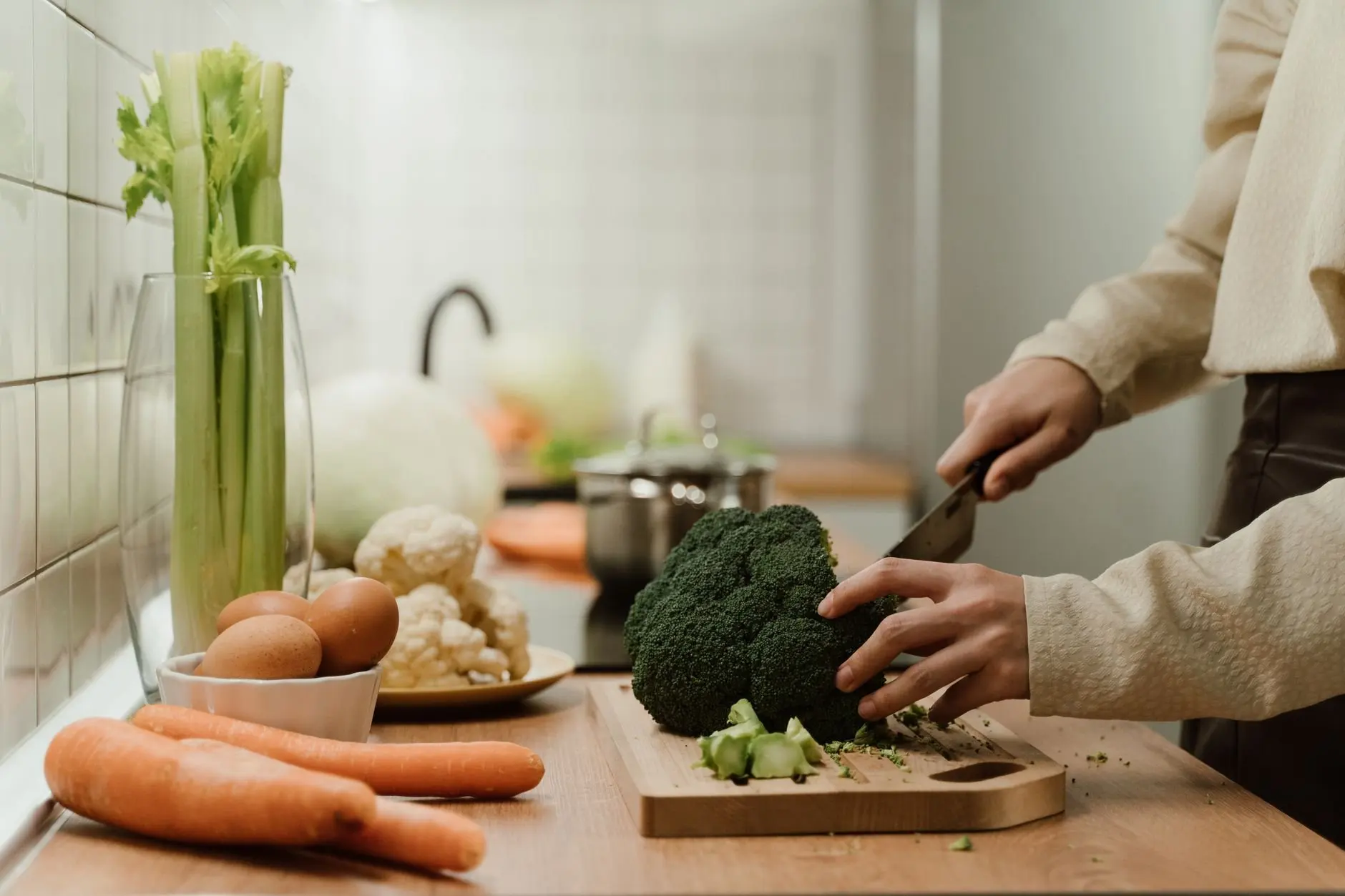
Stock is the foundation. A homemade vegetable stock built on onion, carrot and celery gives risotto and soups a clean, sweet base, and it avoids the over-salting that can come with strongly seasoned ready-made products. Keep the stock hot in a separate pan so each addition does not cool the rice.
Gnocchi
Gnocchi are a good choice for cooks who like dough but not rolling and cutting thin sheets. A homemade version rewards a light hand, since overworked dough turns dense. The full method is set out in a homemade potato gnocchi recipe. For quick dinners, ready-made gnocchi still make a fast meal: Jamie Oliver’s collection lists a gnocchi peperonata at 20 mins, pairing the dumplings with a pepper sauce.
Gnocchi also suit richer sauces. Life, Lemons & Italy includes gnocchi with gorgonzola and walnuts in its easy Italian dishes, a pairing that works well in cooler months because the sauce needs only a few ingredients and little cooking.
Soups
When the aim is a gentle, filling first course, soup is the lowest-effort route. A pot of vegetables and broth can be made ahead and reheated, which makes it more forgiving than risotto. More options are collected in traditional italian soup recipes.
Easy main courses and side dishes
The question of which Italian main courses are easy at home has a practical answer: choose dishes where one pan or one tray does most of the work, and let a simple side finish the plate.
Chicken and one-pan dishes
Chicken is the most approachable protein. Jamie Oliver’s collection pairs chicken Milanese with spaghetti arrabbiata and lists the combined recipe at 45 mins. That works as a full meal because the sauce from the pasta course can be made while the cutlets cook. Feasting at Home also lists a traditional chicken cacciatore recipe, a braised dish suited to cooks who prefer to start a pot and leave it.
- Pan-fried cutlets suit cooks who want a quick main and are comfortable at a hot hob.
- Braises such as cacciatore suit cooks who want less last-minute work and a dish that holds well until guests arrive.
- Baked pasta suits a table of mixed appetites, because a single dish feeds everyone and needs no fuss at serving time.
For a wider choice, traditional italian meat recipes cover roasts, braises and cutlets, while a pâté-style option is explained in the rabbit terrine recipe for cooks who like to prepare a dish ahead and slice it cold.
Fish
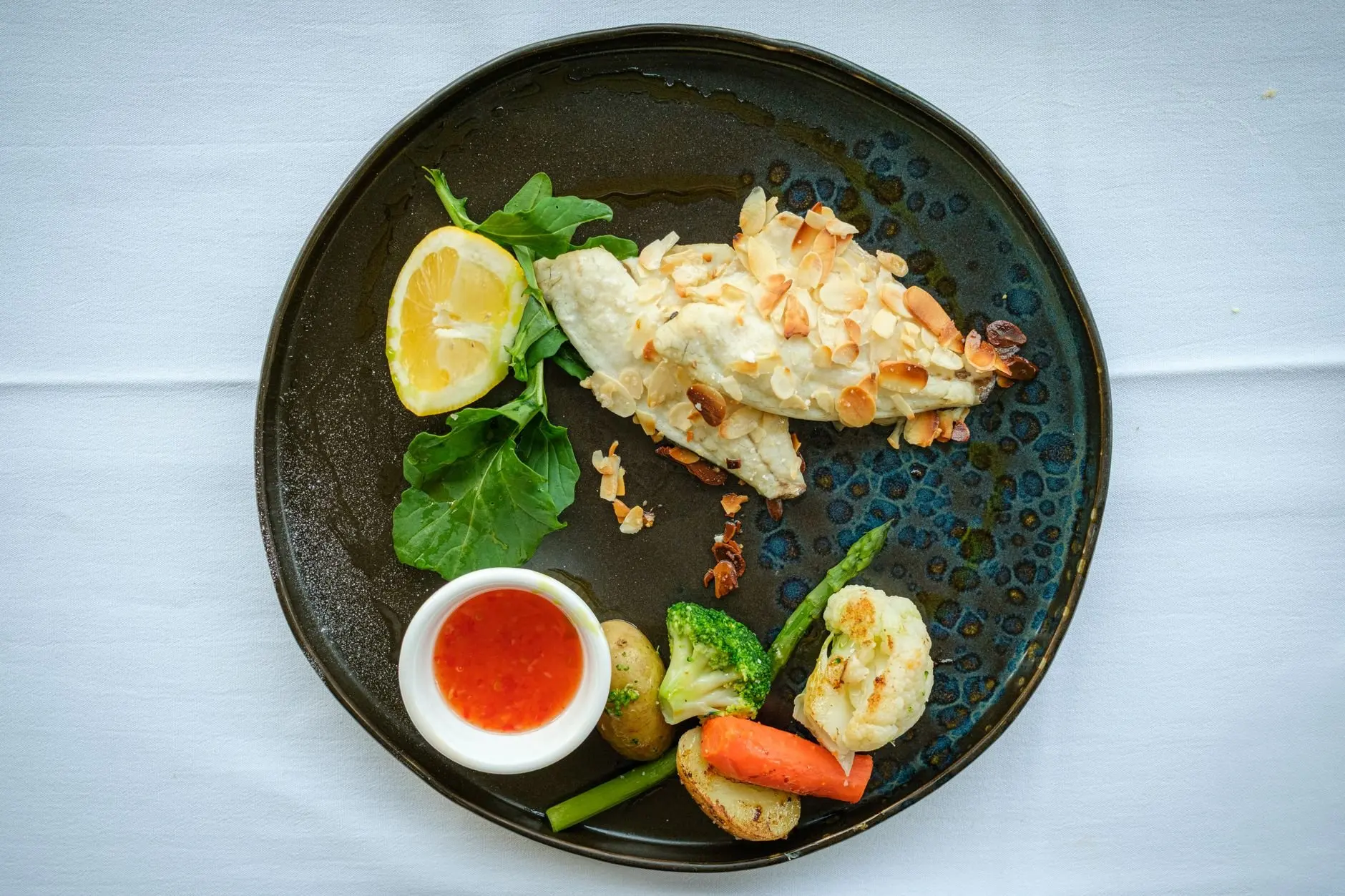
Fish suits cooks who want a light main and have little time, since fillets cook briefly. A crust of thin potato slices or toasted nuts adds texture without needing a complex sauce, and a lemon wedge and greens complete the plate. More methods and species are gathered in traditional italian fish recipes.
Vegetable sides and starters
A side dish should share the oven or hob with the main, not compete with it. A small baked potato dish such as a tortino di patate works as a side or as a starter, and it can be assembled before guests arrive. For cold or room-temperature sides, Jamie Oliver’s simple caponata is listed at 35 mins, which suits cooks who want a vegetable dish that can sit until it is needed. The wider range of choices is organised under italian vegetable side dishes.
Preserves and make-ahead cooking
Preserving is the part of Italian home cooking that turns seasonal abundance into a pantry. It suits cooks who enjoy a long, calm session in the kitchen and who like to find a jar waiting later in the year.
Roasted peppers and tomatoes
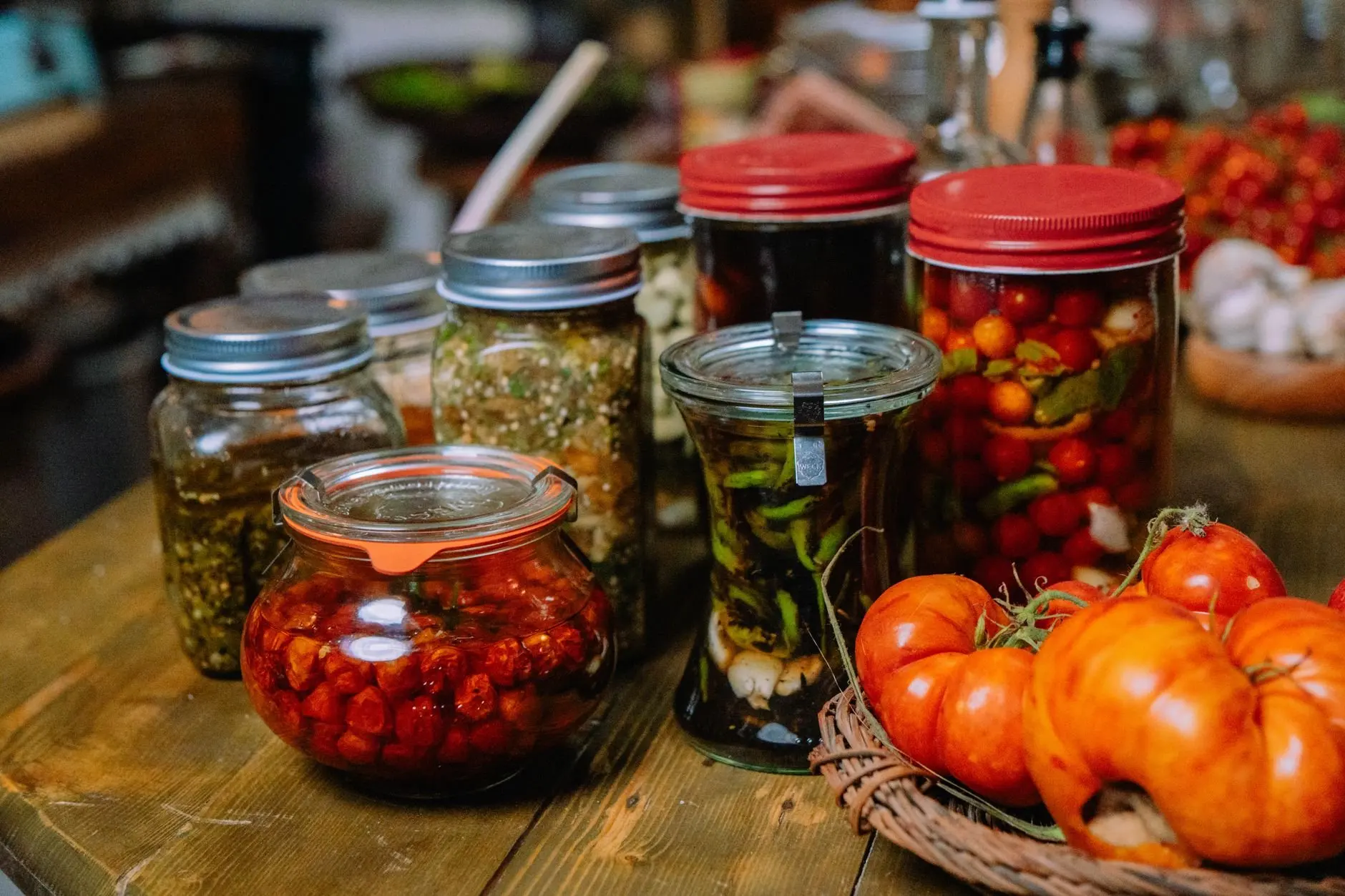
Roasted peppers kept in oil are a classic starting point, because they turn a seasonal vegetable into an instant antipasto, sandwich filling or pasta ingredient. The method and storage guidance are covered in italian roasted peppers in olive oil. Preserved tomatoes follow a similar logic and feed straight back into the sauces earlier in this guide.
A cautious approach to jars
Preserving in oil and in jars carries food-safety considerations, so follow a tested recipe closely and do not improvise on quantities of acid, salt or storage. Treat any recipe that omits storage and safety instructions with suspicion, and read a recipe fully before buying produce.
Make-ahead logic for the rest of the table
Many of the dishes above reward preparation in advance. Sauces and stocks can be made first, braises improve when reheated, and a terrine or caponata is meant to be served cool. Planning one make-ahead dish per meal frees the cook to concentrate on the pasta or rice that has to be finished at the last minute.
Regional and comfort cooking
Italian home cooking is not a single national style. Each area has its own staples, and many of the most satisfying recipes come from the idea of making plain ingredients taste good. Readers who want to see how the repertoire changes from place to place can browse regional italian recipes.
- Thrifty cooking. Dishes based on bread, beans, vegetables and leftovers are collected under cucina povera recipes. They suit cooks who want maximum flavour from a modest shopping list.
- Warming dishes. Baked pasta, gnocchi in rich sauces and slow braises appear in italian comfort food recipes, a good starting point for cold evenings.
Both routes build on the same basics already covered here, so nothing in these collections requires skills beyond sauces, pasta and simple mains. The table below pulls the benchmark timings together so a cook can match a recipe to the time available.
Recipe times at a glance
| Recipe | Listed total time | Planning use |
|---|---|---|
| Simple arrabbiata | 20 mins | Weeknight pasta with a spicy tomato sauce |
| Simple puttanesca | 20 mins | Pantry-based sauce for a quick dinner |
| Gnocchi peperonata | 20 mins | Fast supper using ready-made gnocchi |
| Simple caponata | 35 mins | Vegetable side or starter that can be made ahead |
| Chicken Milanese and spaghetti arrabbiata | 45 mins | Complete main and pasta on one plan |
| Pork agnolotti | 50 mins | First filled-pasta session |
| Classic cannelloni | 2 hrs | Weekend baked pasta for a group |
These times are the totals listed in Jamie Oliver’s Italian-style recipe collection, and a first attempt at an unfamiliar technique will usually run longer.
Where to go next
The best next step depends on what is missing from the current repertoire. Use the list below as a decision guide.
- No reliable sauce yet: begin with tomato sauce and move through classic italian pasta sauces.
- Confident with sauces: try fresh pasta, then filled pasta, and keep the filling dry and the sauce light.
- Want a rice dish: learn risotto, because it carries over to many seasonal variations.
- Cooking for others: combine a quick pasta with a simple main and a make-ahead side so the cook is at the table with everyone else.
- Cooking on a budget: explore thrifty traditions and use up what is in the fridge.
Italian home cooking improves through repetition. Cooking the same sauce several times teaches more than trying a new recipe every evening, because small adjustments in salt, heat and timing become easier to notice.
Frequently asked questions
What are the basic Italian home cooking recipes for beginners?
Start with a tomato-based pasta such as arrabbiata or puttanesca, each listed at 20 mins in Jamie Oliver’s collection. Then add a simple risotto, a baked potato dish and a chicken main. Together they cover sauce, rice, sides and mains.
How do you make fresh filled pasta like tortelli?
Rest a pasta dough, prepare a thick, dry filling such as ricotta with squeezed greens, roll the dough thin, place mounds at even intervals, seal out the air and cut. Simmer gently until the pieces float. A pork agnolotti recipe is listed at 50 mins in total.
Which Italian main courses are easy to cook at home?
Chicken Milanese served with spaghetti arrabbiata is listed at 45 mins, and chicken cacciatore is a braised option that needs less last-minute work. Stuffed shells with ricotta are an easy baked choice for a group.
Is ricotta only used in desserts?
No. Ricotta also appears in savoury cooking, including baked stuffed pasta shells with mushrooms and spinach and filled pasta, where its soft, mild character carries herbs and greens.
Do dried and fresh pasta cook in the same time?
No. Cooking times depend on the shape and the maker, so follow the packet for dried pasta and taste early when cooking fresh pasta, which is more delicate.