| Symptom | First action | Planning use |
|---|---|---|
| Slices crumble when layering | Shorten the parboil to 5 to 8 minutes and stop before the potatoes are fully cooked | Decide the boiling time before you start. Over-boiled slices cannot be layered neatly. |
| Slices cook unevenly | Cut them to about 0.5 cm | Even thickness lets the whole stack finish at the same time. |
| Top stays pale | Bake in a preheated oven at 200°C for about 20 minutes, until a golden crust forms | Judge doneness by crust colour, not only by the clock. |
| Tortino sticks to the tin | Butter the tin lightly, then dust it with breadcrumbs | Do this before the first potato slice goes in. |
| Result tastes too salty | Skip salt on each layer, because Parmigiano Reggiano is already salty | Season the parboiling water, not every layer. |
| Dinner is tomorrow | Bake, cool, refrigerate for two or three days at most, then reheat in the oven | Plan the bake for the day before, or the day before that. |
Timings and quantities in this table come from the Allacciate il grembiule tortino di patate recipe.
A tortino di patate is a layered potato cake of thin parboiled slices and cheese, baked until golden and cut into wedges. It works as a make-ahead side or a light main.
For more everyday dishes in the same spirit, browse the italian home cooking recipes. The sections below follow the table: what to buy, how to cut and boil, how to layer with or without cheese, how to bake and unmould, and how to schedule it ahead.
Ingredients and tin
The Allacciate il grembiule recipe serves four with 800 g of potatoes, 250 g of Brie or another cheese and 80 g of Parmigiano Reggiano. It lists 15 minutes of preparation and 30 minutes of cooking, so the dish is short on hands-on time and suits a weeknight.
Butter and breadcrumbs make up the rest of the kit, and the tin matters as much as the potatoes. Butter the baking dish lightly, then scatter breadcrumbs over the butter. The same recipe says the breadcrumbs only serve to make the tortino stick less to the tin. Treat them as a release layer, not a flavour or a crust.
- Tin size: choose a dish that lets the slices stack in several layers. A very wide dish gives a thin, dry sheet that is hard to unmould in wedges.
- Butter: keep the coating light. Butter is also used as flakes on top before baking.
- Breadcrumbs: fine crumbs coat the tin evenly. Use them only as the base layer.
Choosing potatoes
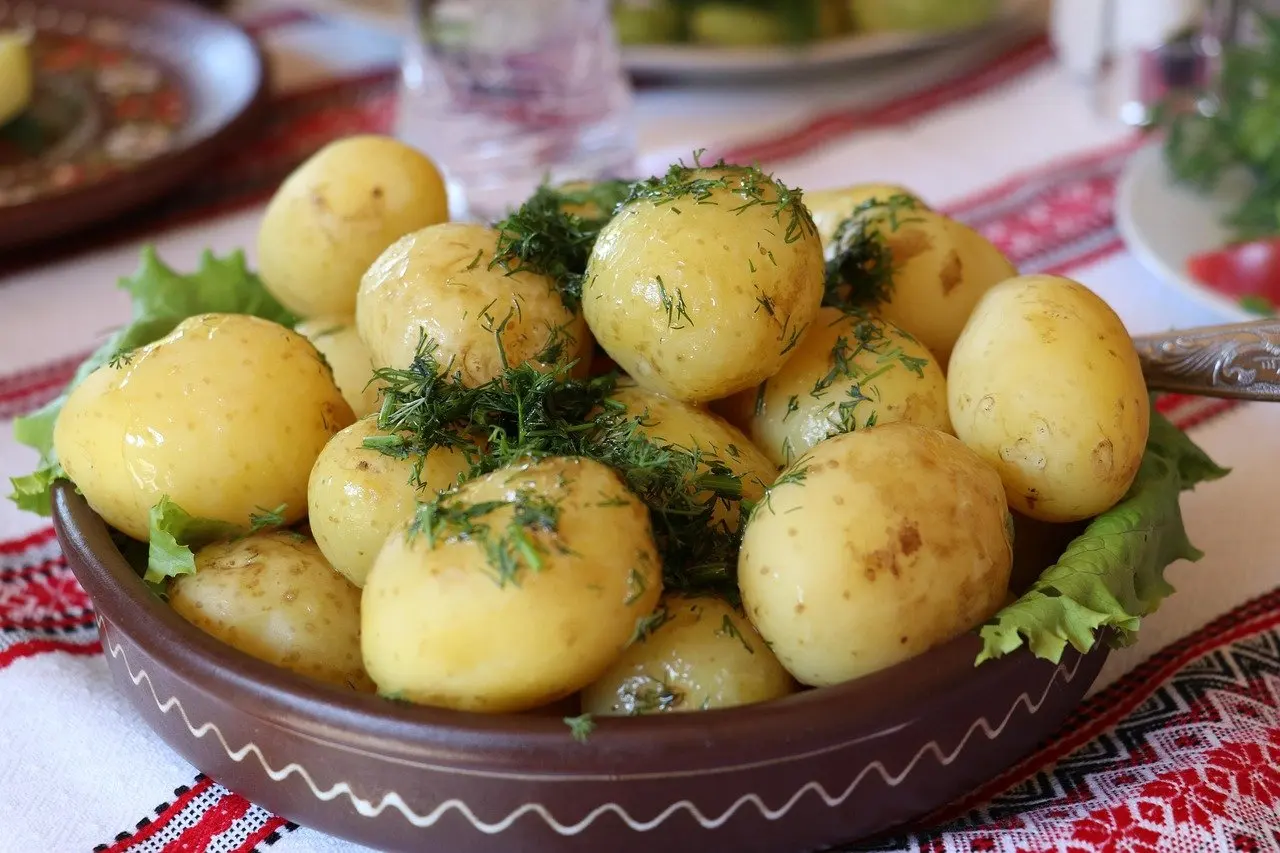
Choose a potato you already know stays whole after a short boil, because the parboil is where a tortino succeeds or fails. The recipe warns against overcooking the slices in water, since they will fall apart. Variety and timing work together here, so a variety that goes mushy quickly is a poor match for a stacked dish.
A related Italian dish, the Foggiana potato torta, shows the range of cooks’ choices. The Epicurious version uses red- or white-skinned potatoes, but it boils them until tender and mashes them, so it needs a different texture from sliced layers. Reserve the tender-boil method for mashed tortes, and keep the sliced tortino to a brief parboil.
Slicing and parboiling
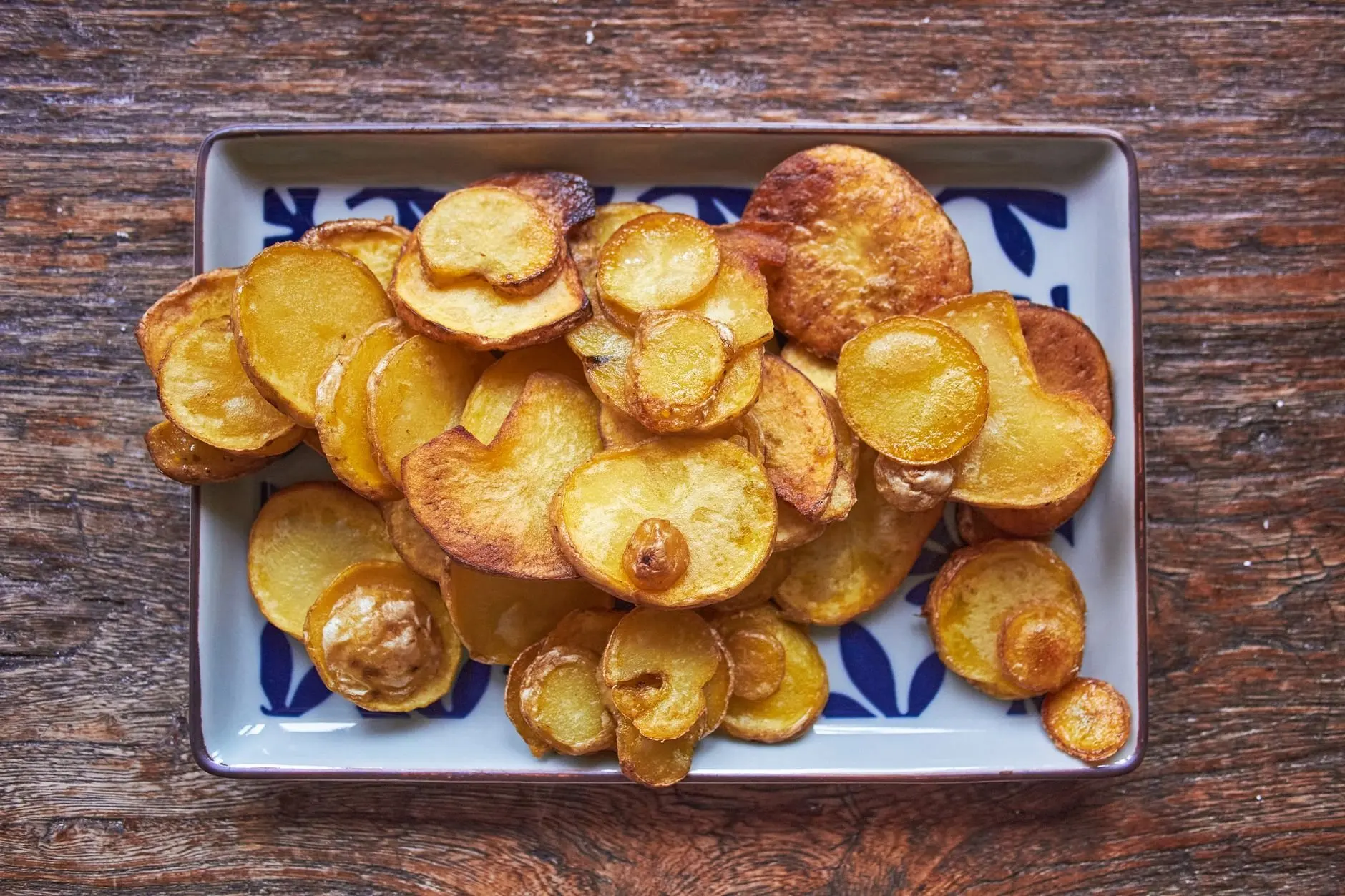
Cut the potatoes into slices of about 0.5 cm, as the Allacciate il grembiule recipe describes. Slices of that thickness are sturdy enough to survive boiling and layering but thin enough to cook through in the oven. A mandoline gives the most even result. A sharp knife on a board works if you cut steadily.
Boil the slices for 5 to 8 minutes in lightly salted water. The slices should still be firm when they come out, because they finish cooking in the oven. Lift them out gently and let them drain before layering, so no extra water ends up in the tin.
- Symptom: slices break in the pot. The fix is a shorter time. Start checking near the 5-minute end of the range.
- Symptom: slices stay raw-crisp after baking. The slices were probably cut too thick or the boil was cut too short. Slice nearer 0.5 cm next time.
Layering with and without cheese
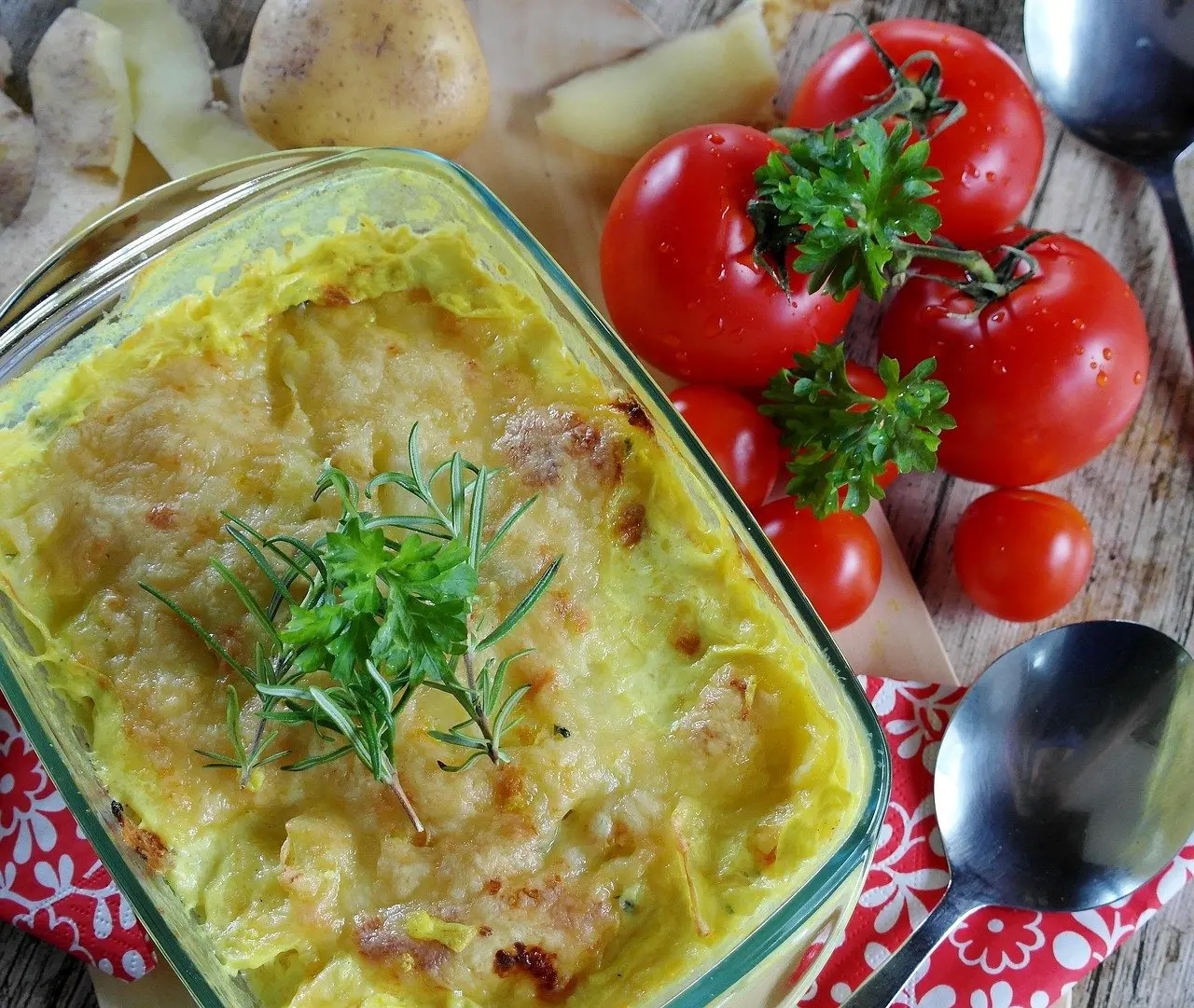
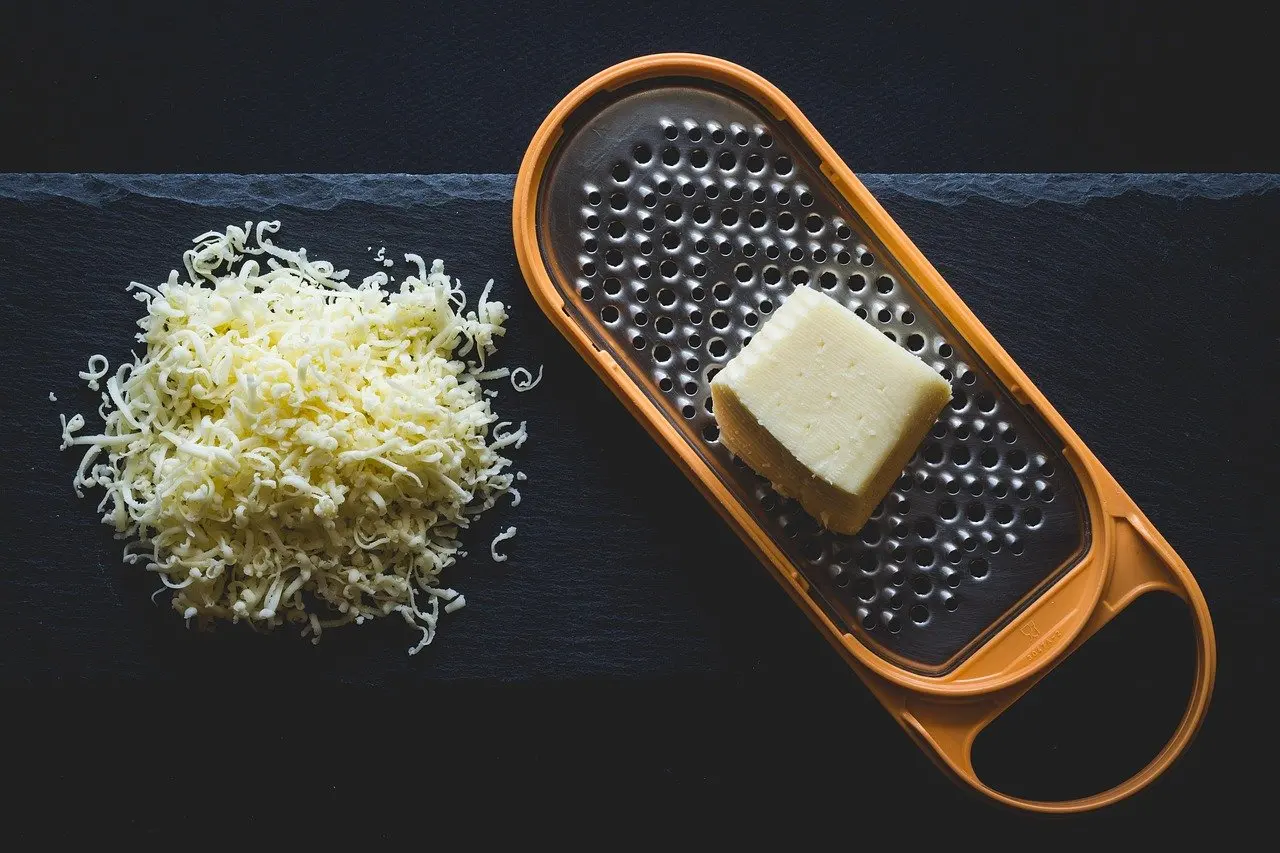
Alternate potato slices with thin cheese and Parmigiano, and finish the top with potato and Parmigiano. That is the pattern in the Allacciate il grembiule recipe, which names Brie as the main cheese. It also says mozzarella, or sweet or smoked scamorza, can replace the Brie.
Which cheese suits which result
- Brie: gives a soft, rich middle, with Parmigiano supplying the savoury edge.
- Mozzarella: the mildest swap. It suits cooks who want the potato to lead.
- Sweet scamorza: a similar melting layer with a little more character.
- Smoked scamorza: the strongest swap. Choose it when the tortino is the main dish and not a quiet side.
A hard grating cheese other than Parmigiano also works. The Epicurious Foggiana torta uses 2/3 cup of just-grated pecorino in its filling, which shows that sharp sheep’s cheese is a traditional partner for baked potato.
The no-cheese version
A tortino without cheese layers is lighter and more clearly potato, but it loses the salt that the Parmigiano supplied. Since the recipe advises against salting every layer because the Parmigiano is already salty, a version without it needs its own seasoning. Salt the parboiling water and taste a cooled slice before building. Butter flakes and olive oil can carry the richness the cheese would have given.
A sauce between layers is another way to avoid cheese. The Foggiana torta spoons half its sauce between potato layers and tops the dish with breadcrumbs. A spoonful of homemade italian tomato sauce is a natural candidate for the same role. Use it sparingly so the stack does not turn wet.
Baking and turning out
Bake the tortino in a preheated oven at 200°C for about 20 minutes, until a golden crust forms, as the Allacciate il grembiule recipe directs. Before baking, spoon milk over the top and add flakes of butter. The golden crust, not the full time, tells you it is done.
Unmoulding is mostly decided before the oven. Three habits protect the shape:
- Prepare the tin properly. A light butter coat and a dusting of breadcrumbs give the stack a release layer.
- Keep the slices intact. Slices that were parboiled only briefly hold together, so the wedge keeps its layers when cut.
- Season lightly between layers. This keeps the crust tasting of potato and cheese, not just salt.
Compared with a gratin, which is normally brought to the table in its dish, a tortino is built in a breadcrumb-lined tin so it can come out whole and be cut as a layered cake. That finishing step is the difference between the two, since the filling is essentially the same family of potato, cheese and butter.
Making ahead and reheating
The tortino keeps well, and the Allacciate il grembiule recipe says it keeps in the refrigerator for two or three days and can be reheated in the oven. That makes it a good choice for a table where the main course takes the cook’s attention. It is a poor choice if you plan to hold it longer than that window.
- Bake it fully on the day you have time, until the crust is golden.
- Cool it in its tin and cut it into wedges once it has settled.
- Refrigerate it covered and plan to eat it within two or three days.
- Reheat the wedges in the oven until hot through, then serve.
Oven reheating keeps the crust, which a microwave would soften. Apart from the refrigeration window, no source supplies a different time or temperature for reheating, so judge by heat through the centre and by the colour of the top.
Frequently asked questions
| Question | Answer |
|---|---|
| Is the milk necessary? | No. The recipe says the milk softens everything and makes it creamier, but you can leave it out. |
| Which dish can I bake it in? | A buttered tin with breadcrumbs is the usual choice for a tortino that is turned out. The Foggiana torta uses a lightly oiled shallow terra-cotta or enameled cast-iron casserole, which suits a version served from the dish. |
| Should it be served hot or cold? | The Epicurious Foggiana potato torta is described as better at room temperature. A hot tortino from the oven is still the norm for the sliced version. |
| How many people does it serve? | The Allacciate il grembiule recipe serves four. The Epicurious torta serves six, with a different, mashed filling. |