| Symptom | First action | Planning use |
|---|---|---|
| Dough is soft and awkward when lining the tin | Chill the tart shell for 30 minutes, then prick the base with a fork before filling | Build the 30-minute rest into the timeline between lining and filling |
| Crust slumps or loses its edge in the oven | Chill the filled tart before it goes into the oven | Plan a second chill after assembly, not only after lining |
| Jam threatens to bubble over | Use a good-quality jam with minimal added sugar and spread it in an even layer | Pick the jar before you start, because it cannot be fixed once the tart is baking |
| Unsure when the tart is done | Bake at 375 F and look for golden brown after about 30-45 minutes | Start checking at the early end of the range and judge by colour |
| Filling runs out when the tart is cut | Let the tart cool before slicing | Leave at least 20 to 30 minutes before serving |
Figures above come from the Savoring Italy strawberry crostata method, with the chilling advice supported by the Pearl Posts apple crostata recipe.
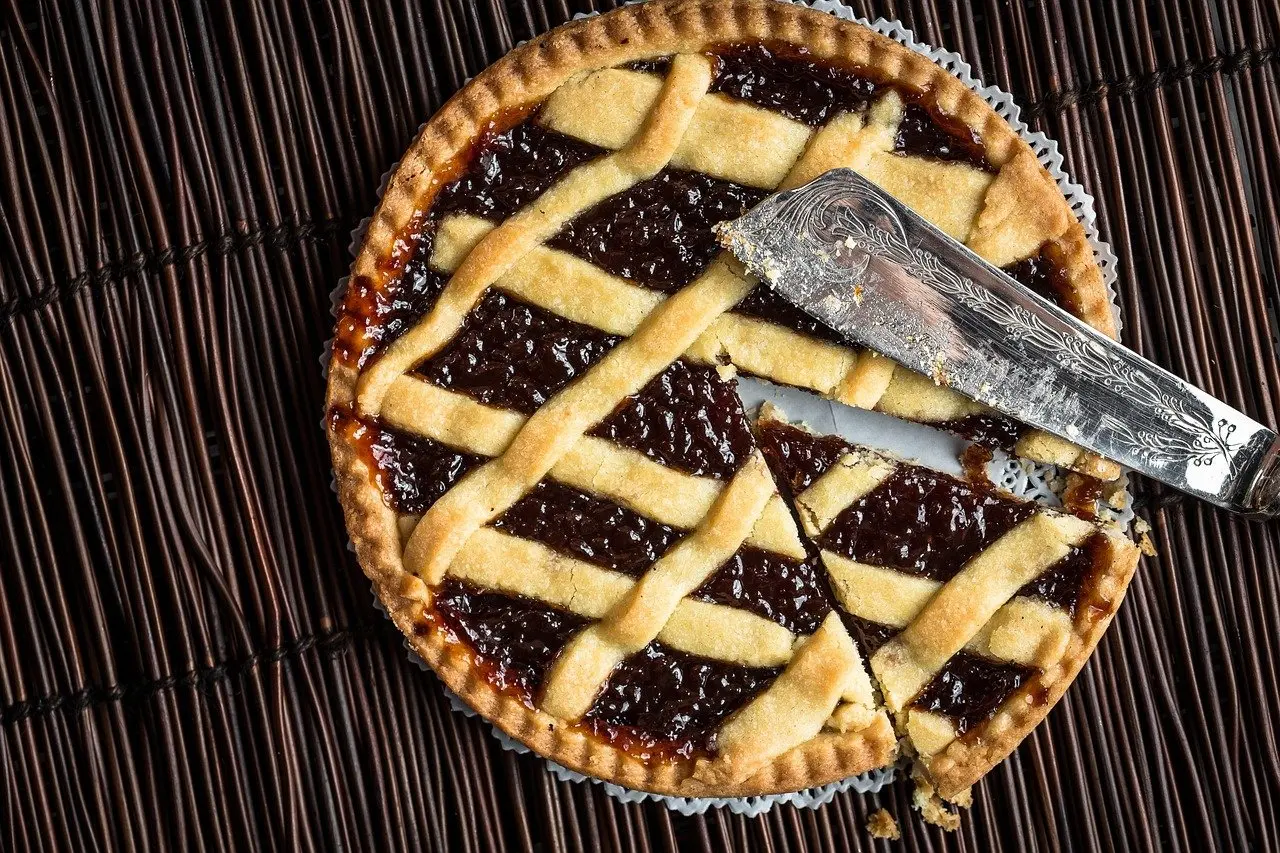
This crostata recipe covers the assembly and baking of a jam tart: line the tin with pasta frolla, spread the filling, add a lattice and bake until golden. The dough technique itself sits on its own page.
The crostata sits among our italian dessert recipes, and each symptom above maps to a section below, from tin size to the ricotta variation.
Tin size, pastry quantity and oven settings
A standard jam crostata suits a fluted tart tin with a removable bottom, baked at a moderate oven temperature until the crust is golden. The reference recipe from Savoring Italy sets all three out clearly.
Tin
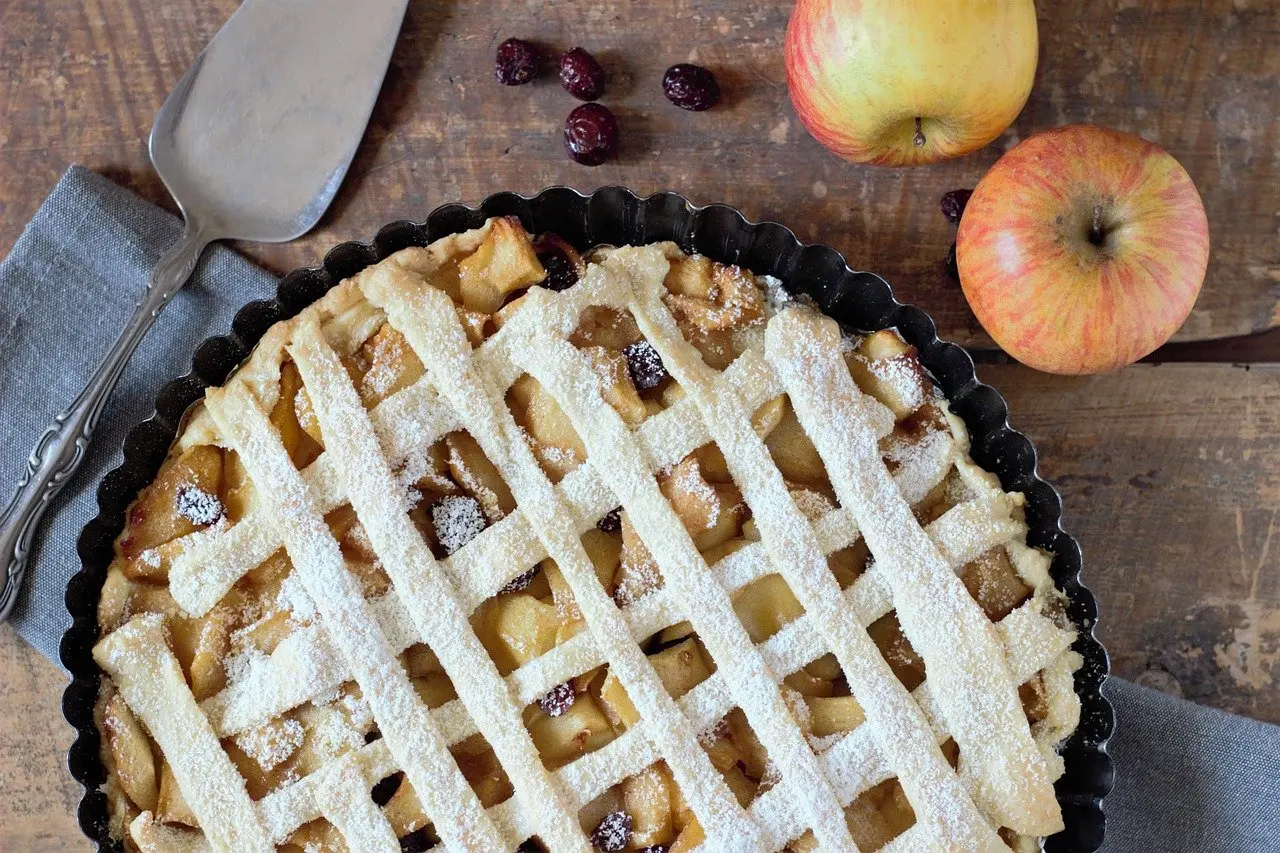
That recipe uses an 11-inch fluted tart pan with a removable bottom. Treat it as the working size for a full, shareable tart. A smaller tin needs proportionally less pastry and less filling, so scale the dough down rather than stretching it thin.
Pastry for one tin
For the 11-inch tin, the pasta frolla uses 300 g pastry flour, 200 g unsalted butter, 100 g sugar, and 1 whole egg plus 1 yolk. That batch lines the tin and leaves a piece of dough in reserve, which is the dough the lattice is cut from later. Make the pastry first, since the shell needs a rest before anything goes into it.
Oven temperature and time
The jam crostata bakes at 375 F for approximately 30-45 minutes, until golden brown. The spread is wide because ovens and filling depths differ, so colour is a better signal than the clock. If the lattice browns well before the filling looks settled, that is a reason to lower the tin in the oven rather than extend the time blindly.
Lining the tin and chilling the shell
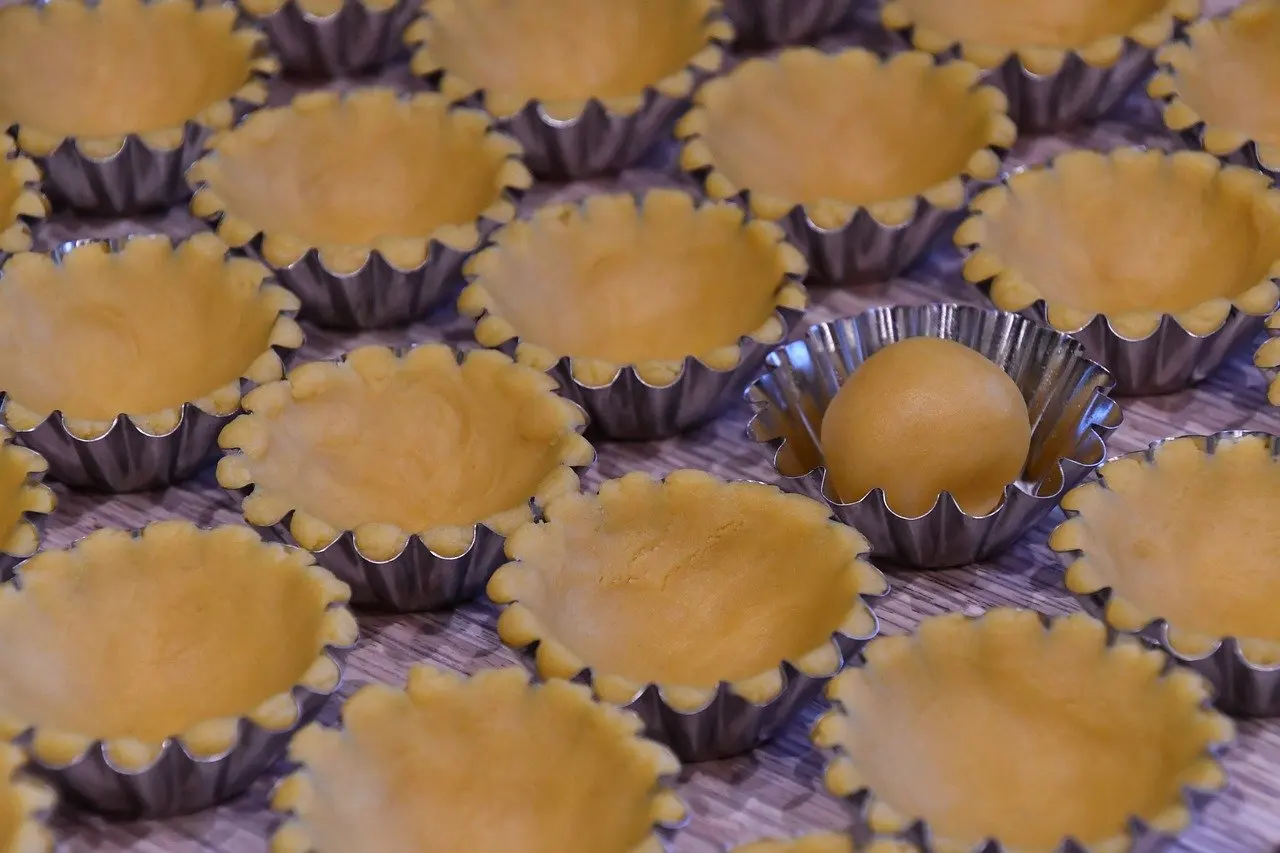
Press or roll the pasta frolla into the fluted tin, trim the edge, then rest the shell before filling. The Savoring Italy method chills the tart shell for 30 minutes and then pricks the base with a fork before the filling goes in.
Do you need to blind bake the base?
No, not for a jam crostata made this way. Blind baking means baking an empty shell before it is filled. In the Savoring Italy method the shell is only chilled and pricked, then filled raw, and the base bakes together with the jam. That keeps the job to a single bake and avoids handling a hot, empty shell.
Chilling after assembly
A second chill matters as much as the first. According to Savoring Italy, chilling the filled crostata helps the crust hold its shape in the oven. If your kitchen is warm or the dough has softened during lattice work, put the whole tart back in the fridge before baking. Pearl Posts suggests freezing the assembled tart, even briefly, as a stronger version of the same idea.
Choosing and spreading the jam
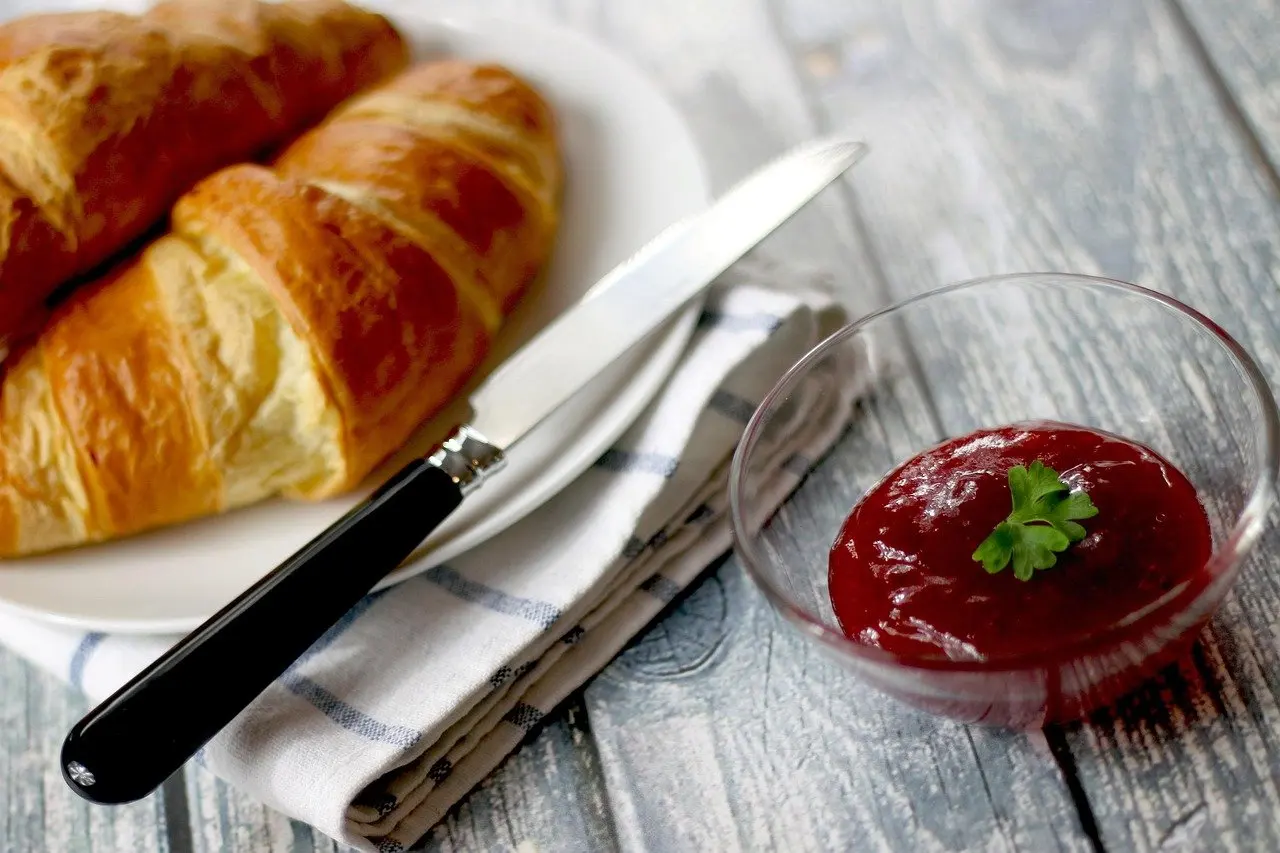
Jam is the filling that defines a crostata di marmellata, so its quality shows in the finished tart. Savoring Italy advises choosing a good-quality jam with minimal added sugar so the fruit flavor shines through. Apricot, strawberry or any preserve with a clear fruit flavour suits the method.
Keeping jam from bubbling over
Bubbling is mostly a question of what goes into the shell and how much. Start with the jam choice above, then spread it in an even layer that stays below the rim of the pastry, so there is room for it to expand. Stir a very stiff jam briefly to make it spreadable instead of thinning it with liquid. Standing the tin on a baking tray catches any drips and keeps the oven clean.
A lattice helps indirectly: the strips hold the surface in place while leaving gaps for steam to escape. If the jam still creeps toward the edge during baking, the cooling stage below is what lets it settle back into a sliceable filling.
Building the lattice
The lattice is cut from the dough set aside when lining the tin. Savoring Italy rolls the remaining piece of dough to 1/8-inch thickness and cuts it into strips. Keep the strips even in width so the pattern looks tidy, and work quickly, because warm pasta frolla becomes sticky and tears.
- Roll the reserved dough to an even thickness on a lightly floured surface.
- Cut straight strips with a knife or fluted pastry wheel.
- Lay the first set of strips across the jam in one direction, with small gaps between them.
- Weave the crossing strips over and under, or simply lay them on top for a quicker pattern.
- Press the strip ends into the edge of the shell and trim any overhang.
- Chill the tart before baking so the pattern keeps its definition.
If the strips crack while you lift them, a short rest in the fridge usually makes the dough easier to handle. A broken strip can be patched on top of the filling, since the lattice is meant to look rustic rather than perfect.
Ricotta crostata and other fillings
Jam is only one option, because pasta frolla suits several fillings. Savoring Italy lists fruit preserves, fresh fruit, pastry cream, ricotta, or even chocolate as the usual choices. Choose jam for the quickest tart, fresh fruit when it is in season, and ricotta when you want something creamier and less sweet.
How to make a ricotta crostata
A crostata with ricotta uses the same shell as the jam version. Line the tin with pasta frolla, chill and prick the base, then spoon the ricotta filling into the shell in place of the jam. Citrus zest or chocolate pieces are the usual flavourings to stir through the ricotta. Bake until the crust turns golden, and use the colour of the pastry as your main guide. Whether to add a lattice is a matter of taste, since an open top shows off the filling.
When to choose pastry cream instead
Pastry cream gives a smooth, custard-style tart with a different texture from jam or ricotta. If you want to make it from scratch, follow our crema pasticcera recipe and fill the shell with it. Fresh fruit can go on top for colour.
Baking, cooling and slicing
Bake the chilled tart at 375 F until the crust is golden brown, checking from the early end of the 30-45 minute range. The same Savoring Italy method says to let the crostata cool for at least 20 to 30 minutes before slicing so the filling sets. Cut too early and the hot jam runs across the board, which spoils the clean slice you worked for.
Once it has set, lift the tart from the removable base and serve it in wedges. If you want a second Italian dessert for the same table, the torta caprese recipe is a natural companion.
Frequently asked questions
| Question | Answer |
|---|---|
| Can I freeze the assembled crostata before baking? | Pearl Posts reports that freezing the assembled tarts for 10-15 minutes improves the crust. This is a short firming step rather than long storage. |
| Can I make several smaller crostate instead of one large tart? | Yes. The Pearl Posts apple crostata recipe makes two 10-inch or three 8-inch crostatas from one batch of its dough. |
| Does an apple crostata bake like a jam one? | Not exactly. The Pearl Posts apple version bakes at 425 F for 40-50 minutes, until the crust is golden brown and the apples are tender, while the jam crostata above uses 375 F. |
| How can I stop a juicy fruit filling from running? | The Pearl Posts apple filling uses 3/4 cup all-purpose flour (98 g) with 4 lb apples and 3 tbsp lemon juice, so flour acts as the thickener for fresh fruit. Jam does not need this step. |